
DR. AKBAR SUPER SPECIALITY EYE HOSPITAL

refractive lens exchange (RLE)
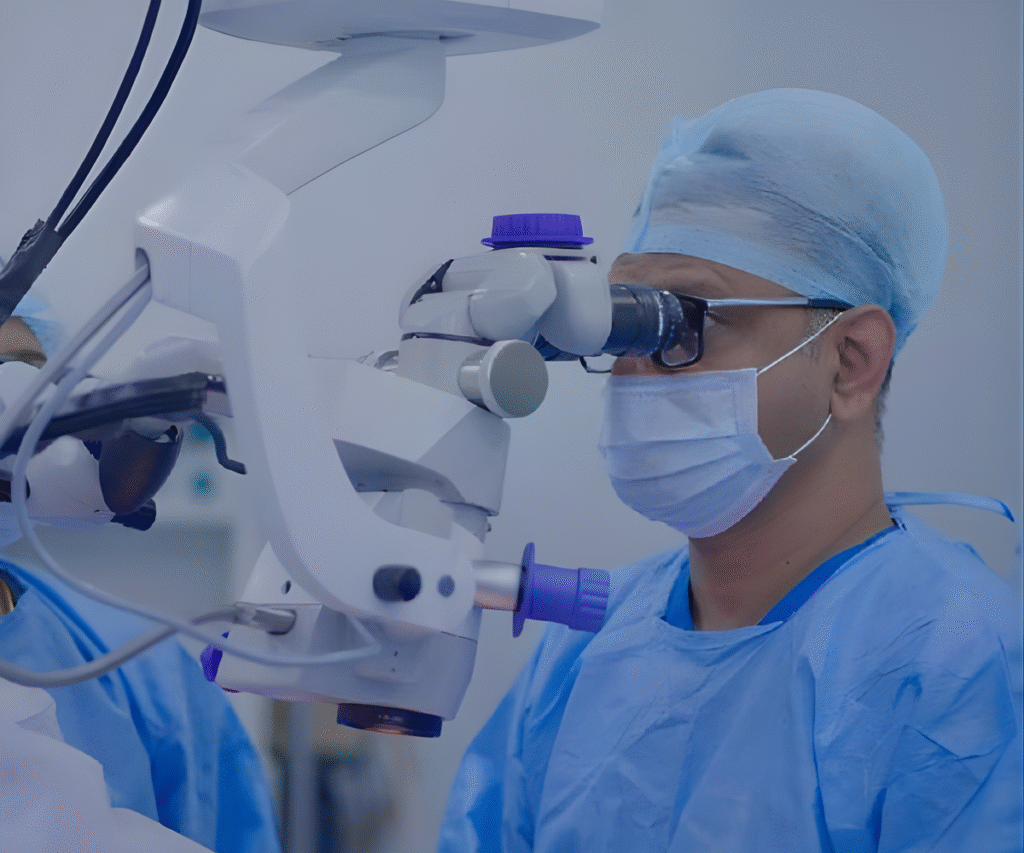
Refractive Lens Exchange (RLE) is a vision correction procedure where the eye’s natural lens is replaced with an artificial intraocular lens (IOL) to correct refractive errors such as presbyopia, high hyperopia, or early cataracts. It’s particularly recommended for patients over 40 who want long-term freedom from glasses or contact lenses.

Conditions Treated with RLE
Presbyopia
Age-related loss of near vision
High Farsightedness (Hyperopia)
When LASIK isn't suitable
Early Cataracts
Lens clouding before full cataract formation
Astigmatism
Corrected using toric IOLs for sharper focus
Symptoms
Flashes of Light
Sudden bright flashes may indicate a retinal tear.
Floaters
Dark spots or strings floating in your vision.
Blurry or Distorted Vision
Objects appear bent or out of focus.
Loss of Peripheral Vision
A shadow or curtain over part of your visual field.
Sudden Vision Changes
Quick onset of blurry vision or loss of clarity.
Difficulty with Night Vision
Trouble seeing in dim light or at night.
Blind Spots
Gaps or dark patches in the visual field.
Swelling or Redness in the Eye
Accompanied by vision changes.
Benefits of RLE
- Permanent vision correction and long-term clarity
- Reduces or eliminates dependence on glasses or contacts
- Prevents cataract formation in the future
- Quick recovery with minimal discomfort
- Ideal for patients unsuitable for LASIK or PRK
Age
Lorem ipsum dolor sit amet, consectetur adipiscing elit.
Genetics
Lorem ipsum dolor sit amet, consectetur adipiscing elit.
Why is RLE Performed?
High Refractive Errors
Ideal for patients with high myopia or hyperopia beyond LASIK or PRK correction limits.
Age-Related Vision Changes (Presbyopia)
Replaces the stiff natural lens with a multifocal or trifocal IOL to restore near and distance vision.
Thin or Irregular Corneas
Safe alternative for patients unsuitable for laser surgery.
Early Cataract Formation
Corrects refractive errors and prevents cataracts from developing later.
Permanent Vision Correction
Offers lifelong clarity by replacing the natural lens, eliminating future cataract risk.
RLE is a safe and effective alternative to laser surgery, ideal for adults over 40 seeking complete freedom from glasses or contact lenses.
Type of Intraocular Lenses
Type of IOLs (Intraocular Lenses) Used in cataract surgery
| Lens Type | Description |
|---|
| Lens Type | Description |
|---|
| Monofocal | Corrects vision for distance only; requires glasses for computer use and reading. |
| EDOF(Extended Depth of focus) | Corrects vision for Distance+ Intermediate + Near without the need for glasses. No halos & glare. |
| Multifocal | Corrects vision for Distance + Intermediate + Near without the need for glasses. May cause halos & glare. |
| Toric IOL (For Astigmatism) | Corrects astigmatism (cylinder > 0.75). Available in Monofocal, EDOF, Multifocal, Trifocal options. |
How the RLE Procedure is Performed
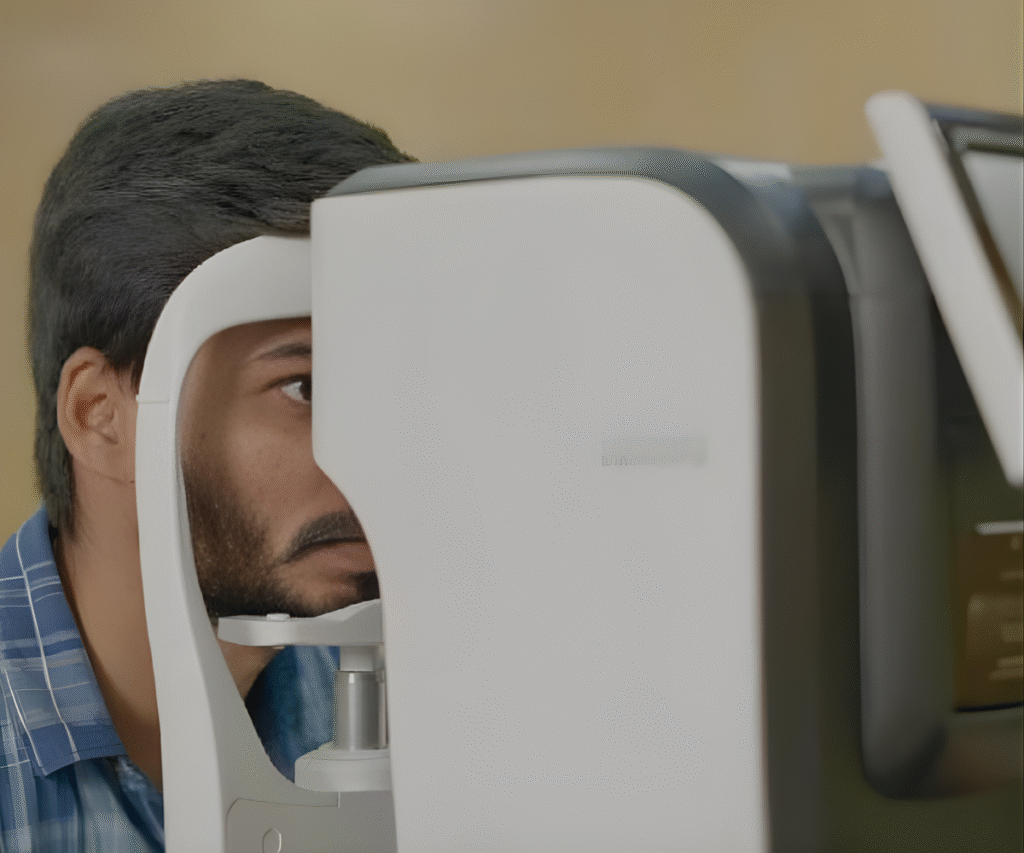
• Before surgery, your eyes are examined and measured to select the ideal lens power for your needs.
• You’ll receive topical anesthesia (numbing eye drops) — no injections or general anesthesia are required.
• The eye is cleaned and covered with a sterile drape. The pupil is dilated to provide access to the natural lens.
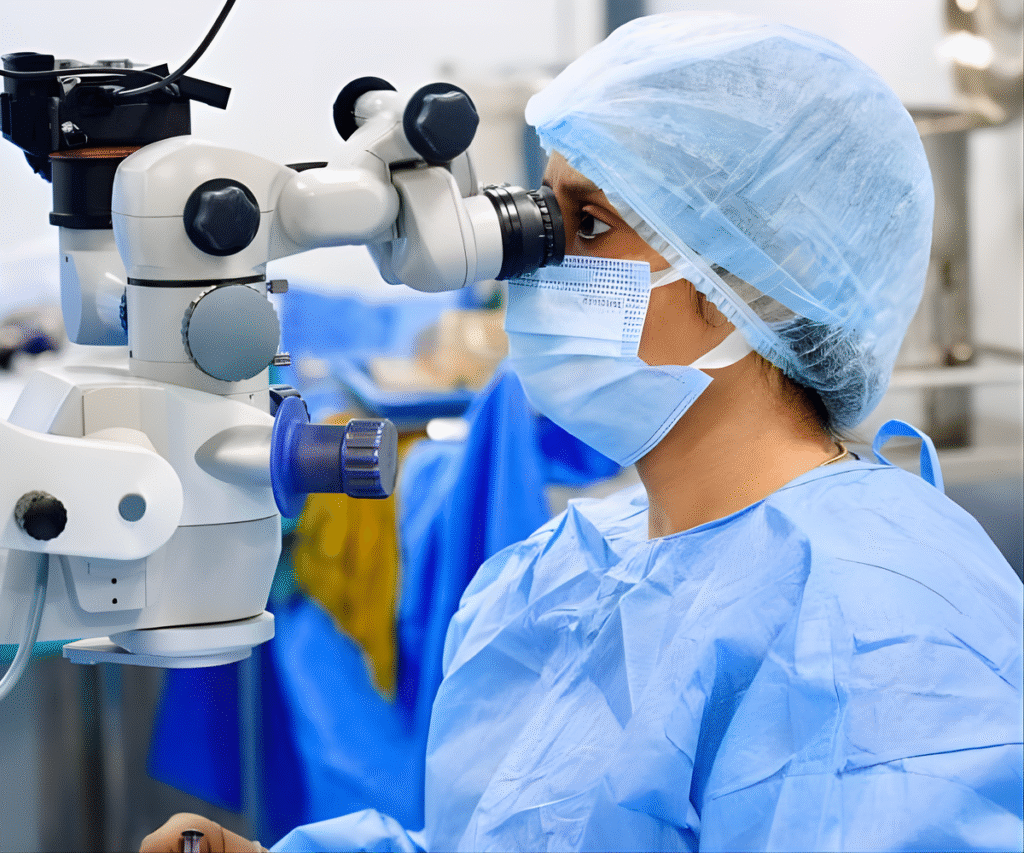
• A tiny incision (2–3 mm) is made at the edge of the cornea.
• The surgeon uses an advanced phacoemulsification system that emits ultrasonic energy to gently break and remove the natural lens.
• Once the old lens is removed, a customized artificial IOL (monofocal, multifocal, trifocal, or toric) is folded and inserted through the same micro-incision.
• The lens unfolds and settles naturally into position inside the eye — no stitches are required.
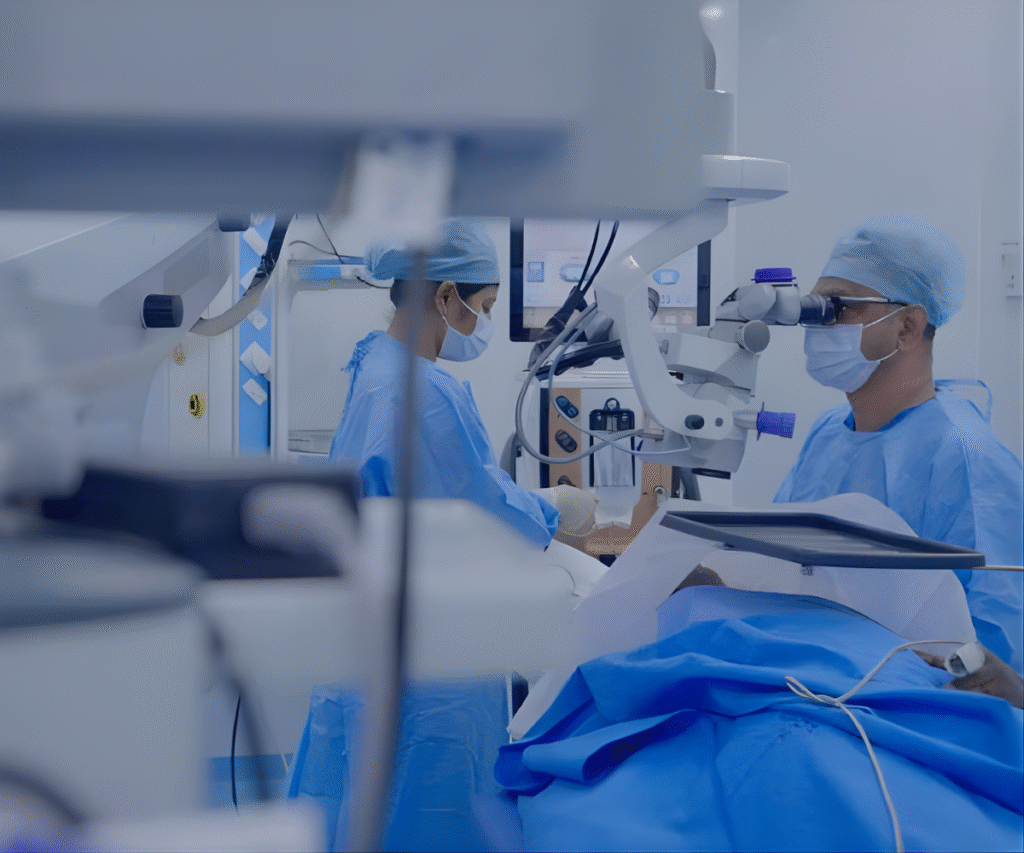
• A protective eye shield may be placed temporarily after surgery.
• You’ll be advised to use antibiotic and anti-inflammatory drops to aid healing and prevent infection.
• Most patients notice a significant improvement in vision within 24–48 hours.
• Follow-up visits are scheduled to monitor healing and ensure the lens is perfectly positioned.
How RLE procedure is Performed
Preparation
• Before surgery, your eyes are examined and measured to select the ideal lens power for your needs.
• You’ll receive topical anesthesia (numbing eye drops) — no injections or general anesthesia are required.
• The eye is cleaned and covered with a sterile drape. The pupil is dilated to provide access to the natural lens.
Lens Removal and Replacement
• A tiny incision (2–3 mm) is made at the edge of the cornea.
• The surgeon uses an advanced phacoemulsification system that emits ultrasonic energy to gently break and remove the natural lens.
• Once the old lens is removed, a customized artificial IOL (monofocal, multifocal, trifocal, or toric) is folded and inserted through the same micro-incision.
• The lens unfolds and settles naturally into position inside the eye — no stitches are required.
After Surgery
• A protective eye shield may be placed temporarily after surgery.
• You’ll be advised to use antibiotic and anti-inflammatory drops to aid healing and prevent infection.
• Most patients notice a significant improvement in vision within 24–48 hours.
• Follow-up visits are scheduled to monitor healing and ensure the lens is perfectly positioned.
Cataract Surgery
Diagnosis & Technology
We use world-class diagnostic and surgical systems to ensure best-in-class results
Alcon Centurian
Provides detailed imaging of eye structures to plan accurate surgeries.
Callisto Eye
Enables robotic precision for exceptional outcomes.
Catalys
Enables robotic precision for exceptional outcomes.
Iol Master
Enables robotic precision for exceptional outcomes.
Leica M822 Microscope
Provides detailed imaging of eye structures to plan accurate surgeries.
Signature Pro
Enables robotic precision for exceptional outcomes.
Zeiss Lumera 300
Enables robotic precision for exceptional outcomes.
Zeiss Lumera I
Enables robotic precision for exceptional outcomes.
Types of Cataracts
Causes of Retinal Conditions Treated by RLE
Diabetic Retinopathy
A complication of diabetes where high blood sugar levels damage the blood vessels of the retina, leading to leakage or bleeding.
Retinal Tears and Detachments
A retinal tear or detachment occurs when the retina pulls away from the back of the eye, often caused by trauma, aging, or certain medical conditions like diabetic retinopathy.
Macular Degeneration
Age-related macular degeneration (AMD) leads to the deterioration of the central part of the retina (macula), causing vision loss in older individuals.
FAQ’s
Frequently Asked Question
- NABH accredited hospital
- Robotic, laser-assisted cataract surgeries
- Decades of surgical expertise
- Advanced IOL selection tailored for every patient
- Personalized care & support before and after surgery
It is similar in technique but performed earlier to correct vision before the lens becomes cloudy.
No, it’s done using topical anesthesia (numbing eye drops), ensuring complete comfort.
Each eye takes about 15–20 minutes, and you can return home the same day.
Most patients experience clearer vision within 1–2 days, with full recovery in a few weeks.
Yes, the artificial intraocular lens is designed to last a lifetime and does not require replacement.
Easy Finance
Pay later with easy finance options

At Dr.Akbar Super Speciality Eye Hospitals, the best eye care hospital in Hyderabad, we offer different treatment plans to make it easier for our patients; by providing a 0% finance* option for all our surgeries, we take a step closer to a holistic patient care policy.
Easy Installments
A refined version of Phaco with even smaller incisions, promoting faster healing and reduced risk of complications.
0% Interest
A refined version of Phaco with even smaller incisions, promoting faster healing and reduced risk of complications.
Instant Approval
A refined version of Phaco with even smaller incisions, promoting faster healing and reduced risk of complications.
Flexible Tenors
A refined version of Phaco with even smaller incisions, promoting faster healing and reduced risk of complications.