Dr. Akbar Eye Hospital

What is Squint?

Squint, or strabismus, is a condition where the eyes are misaligned and point in different directions—one eye may look straight while the other turns inward, outward, upward, or downward. It can be constant or appear only occasionally. If untreated, squint can lead to double vision, poor depth perception, or amblyopia (lazy eye). With early detection, it is highly treatable through glasses, therapy, or surgery.

Symptoms of Squint

Eyes not moving together

Misalignment of one or both eyes

Double vision

Difficulty with depth perception

Eye strain or headaches

Fatigue after reading or focusing

Causes & Risk factors

Family history of squints

Uncorrected refractive errors

Muscle imbalance

Congenetial conditions

Eye injuries

Neurological or developmental delays

Treatment Options

Glasses or Contact Lenses

To correct refractive errors and align vision

Eye Exercises

To strengthen coordination between the eyes

Eye Patches

Treats amblyopia by forcing the weaker eye to work harder, especially effective in children.

Prism Lenses

Prism lenses can align the eyes and reduce double vision.

Botox Injections

Temporarily relax overactive eye muscles (mainly in adults)

Squint Surgery

Adjusts the length/position of eye muscles to correct alignment

What Causes

What Causes Cataracts?

Cataracts typically develop due to the natural aging process of the lens in the eye. However, other factors that contribute to cataract formation include:

Age

Lorem ipsum dolor sit amet, consectetur adipiscing elit.

Genetics

Lorem ipsum dolor sit amet, consectetur adipiscing elit.

Injury

Lorem ipsum dolor sit amet, consectetur adipiscing elit.

Health Conditions

Lorem ipsum dolor sit amet, consectetur adipiscing elit.

Injury

Lorem ipsum dolor sit amet, consectetur adipiscing elit.

UV Exposure

Lorem ipsum dolor sit amet, consectetur adipiscing elit.

Type of Intraocular Lenses

Type of IOLs (Intraocular Lenses) Used in cataract surgery

Lens Type Description
Monofocal Corrects vision for distance only; requires glasses for computer use and reading.
EDOF(Extended Depth of focus) Corrects vision for Distance+ Intermediate + Near without the need for glasses. No halos & glare.
Multifocal Corrects vision for Distance + Intermediate + Near without the need for glasses. May cause halos & glare.
Toric IOL (For Astigmatism) Corrects astigmatism (cylinder > 0.75). Available in Monofocal, EDOF, Multifocal, Trifocal options.

Latest Surgery Options

Latest Cataract Surgery Options

Phacoemulsification (Phaco) Surgery

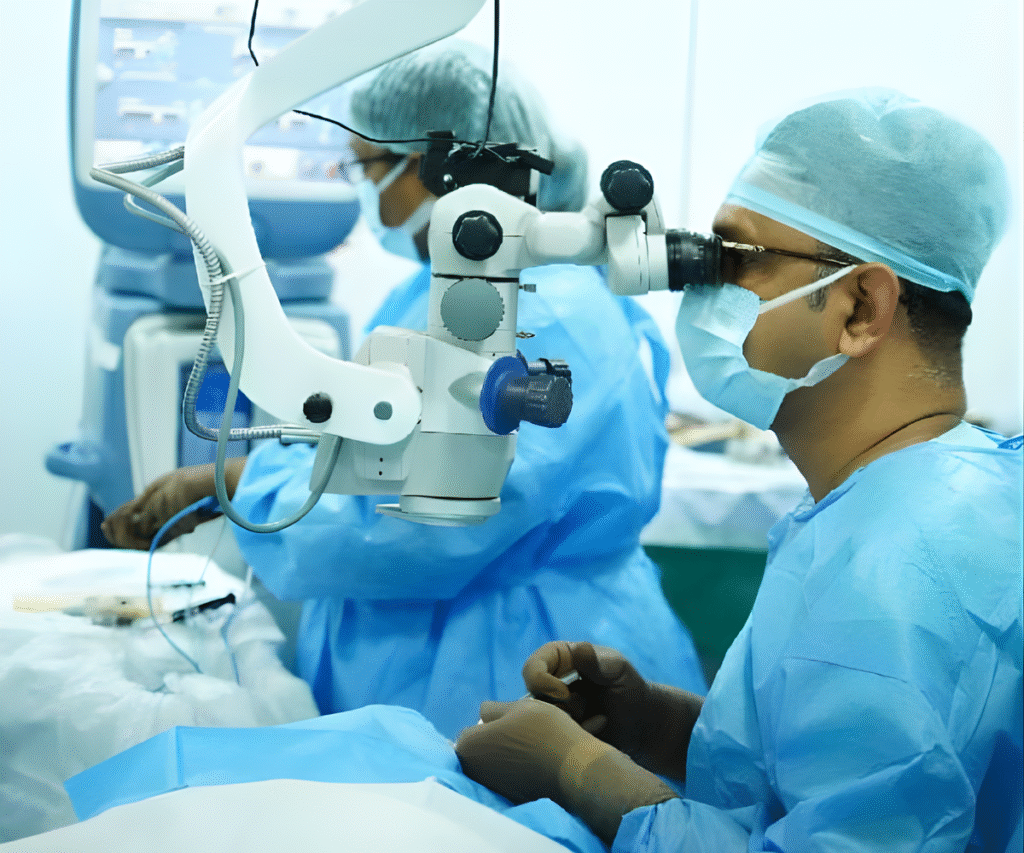
A minimally invasive method where high-frequency sound waves are used to break up the cataract, which is then removed via a small incision.

Micro Incision Cataract Surgery (MICS)

A refined version of Phaco with even smaller incisions, promoting faster healing and reduced risk of complications.

Zepto Cataract Surgery

A cutting-edge technology that uses a precise, controlled micro-pulse to create the perfect circular opening in the lens capsule during surgery. It provides more accuracy and faster recovery.

Robotic Femto Laser Cataract Surgery (FLACS)

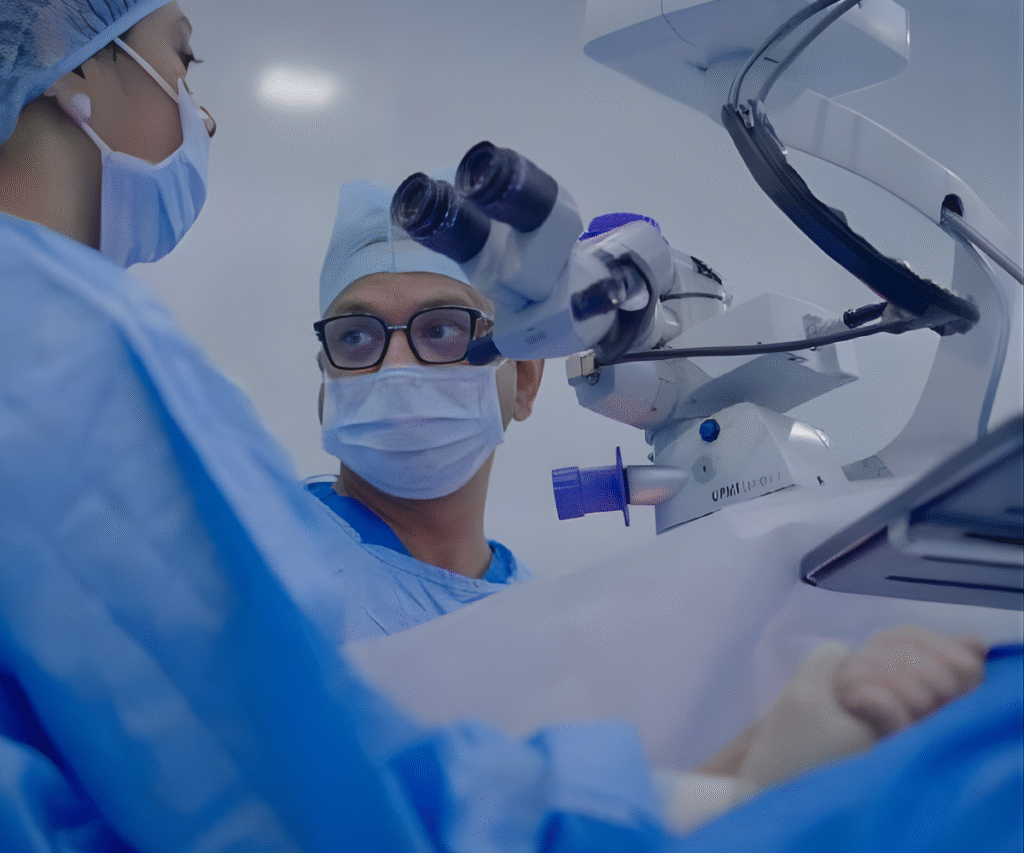
An advanced, Artificial Intelligence-based robotic surgery that uses femtosecond lasers for precise lens fragmentation, improving the accuracy and outcomes of cataract surgery. This is the latest in cataract surgery and offers exceptional control for the surgeon.
Cataract Surgery

Equipment

Eye doctors use advanced diagnostic tools to identify dry eye syndrome.

Leica M822 Microscope

Zeiss Lumera I

Zeiss Lumera 300

Types of Cataracts

Different Types of Cataracts

Non-Surgical Treatments Prism Glasses

Equipped with special lenses to correct mild misalignments and manage double vision.

Botox Injections

Temporarily relaxes overactive eye muscles, improving alignment.

Vision Therapy (Eye Exercises)

Utilizes computerized programs and VR simulations to strengthen eye muscles and enhance coordination.

How you prepare for cataract surgery

  • Consultation: Schedule a comprehensive eye exam with a Best cataract surgeon.
  • medication review: Discuss any medications you’re taking that could affect the procedure.
  • contact lens hiatus stop wearing contact lenses as advised to allow your corneas to return to their natural shape.
  • Arrage transportation plan for someone to drive you home post-treatment.
  • Avoid Eye Makeup keep your eyes free from makeup creams, or lotions on the day before and the day of the procedure

How you prepare for cataract surgery

  • Consultation: Schedule a comprehensive eye exam with a Best cataract surgeon.
  • medication review: Discuss any medications you’re taking that could affect the procedure.
  • contact lens hiatus stop wearing contact lenses as advised to allow your corneas to return to their natural shape.
  • Arrage transportation plan for someone to drive you home post-treatment.
  • Avoid Eye Makeup keep your eyes free from makeup creams, or lotions on the day before and the day of the procedure

How you prepare for cataract surgery

  • Consultation: Schedule a comprehensive eye exam with a Best cataract surgeon.
  • medication review: Discuss any medications you’re taking that could affect the procedure.
  • contact lens hiatus stop wearing contact lenses as advised to allow your corneas to return to their natural shape.
  • Arrage transportation plan for someone to drive you home post-treatment.
  • Avoid Eye Makeup keep your eyes free from makeup creams, or lotions on the day before and the day of the procedure

FAQ’s

Frequently Asked Question

  • NABH accredited hospital
  • Robotic, laser-assisted cataract surgeries
  • Decades of surgical expertise
  • Advanced IOL selection tailored for every patient
  • Personalized care & support before and after surgery

Yes, in many cases, glasses, exercises, or lenses are effective—surgery is only recommended if these don’t work.

No. It’s done under anesthesia and is painless. Recovery is usually quick.

Correction can improve vision and depth perception, especially in children.

No. Adults can undergo correction for both medical and cosmetic reasons.

In most cases, yes. Some may need additional therapy or follow-ups depending on the severity.

Easy Finance

Pay later with easy finance options

At Dr.Akbar Super Speciality Eye Hospitals, the best eye care hospital in Hyderabad, we offer different treatment plans to make it easier for our patients; by providing a 0% finance* option for all our surgeries, we take a step closer to a holistic patient care policy.


33% of the amount is to be paid by the client as a down payment, and Bajaj Finserv finances the remaining 67%. Only a one-time processing fee of INR 687/- is charged by Bajaj Finserv.

Easy Installments

A refined version of Phaco with even smaller incisions, promoting faster healing and reduced risk of complications.

0% Interest

A refined version of Phaco with even smaller incisions, promoting faster healing and reduced risk of complications.

Instant Approval

A refined version of Phaco with even smaller incisions, promoting faster healing and reduced risk of complications.

Flexible Tenors

A refined version of Phaco with even smaller incisions, promoting faster healing and reduced risk of complications.

All Insurances & Cashless facility Available